It’s circa 1776. James Watt had invented the first steam engine. Barely 30 years later, George Stevenson built the first railway to transport coal. In 1829, Stephenson used the railway to pull passenger trains at 50km per hour – a feat, given horse-driven carriages transported people at barely 10km per hour that took 12 days to travel between Edinburgh and London. The Flying Scotsman took just 8 hours for the same distance.
Industrial Revolution changed everything – from agriculture to mining, transportation, manufacturing and construction. Britain became a global powerhouse and started sending engines – a symbol of Industrial Revolution, all over the world, including to the US, Canada and later to South Africa, Malaya, Australia and India.
At about this time, Sir John Soane, Bank of England’s chief architect, had built England’s national bank, the “pride and boast” of his lifetime. The Neo-classical masterpiece borrowed inspiration from the Temple of Vesta at Tivoli in Italy, as well as from the ruins of Ancient Rome, Paestum and Pompeii.
He had also witnessed the influence of Napoleonic expeditions to Egypt in 1798 which became part of the Regency style during the reign of King George III and IV. The simplicity, symmetry and refined proportions of the ancient civilisational designs greatly inspired Soane to rebuild the bank over the period of 45 years as its chief architect.
But Britain, which was growing into an industrial powerhouse and an empire in its own right, was eager to build its own sense of nationalism. Its medieval castles and cathedrals became its symbols of conquests, technological advancement and Anglo-Catholic beliefs, thus giving rise to Neo Gothic revival. The industrial design extended to architecture through complex structural elements like ribbed vaulting on the roof, stained glass windows supported by iron frames and tall arches held up by slender columns were markedly different to thick walls, voluminous domes and interiors filled with busts and statues of pagan gods.
Soane witnessed this transition first hand and by the end of his lifetime in 1837, much of England had moved away from being seen as extensions of the “new republic” towards creating an identity of its own, transitioning from Romanesque to Gothic.
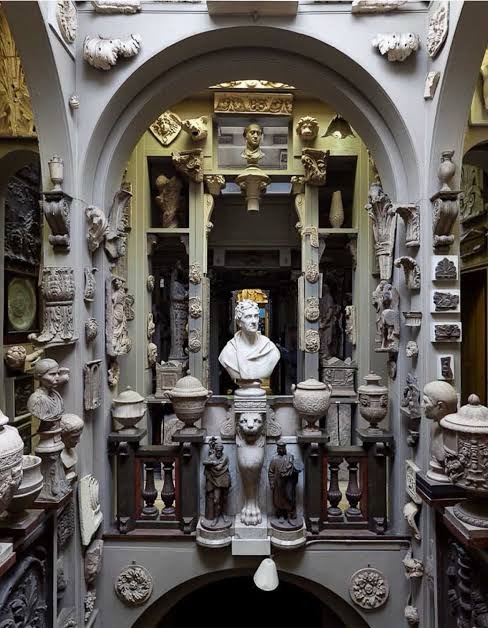
As the world around him changed, Soane couldn’t help feel a great sense of loss. The three-storey Pitzhanger Manor in Lincoln’s Inn Fields became his refuge where Soane applied his design philosophy and filled his residence with a private collection of architecture models, blueprints, paintings, lithographs, sculptures, antiquities and furniture which Soane acquired during his tenure as the chief architect.
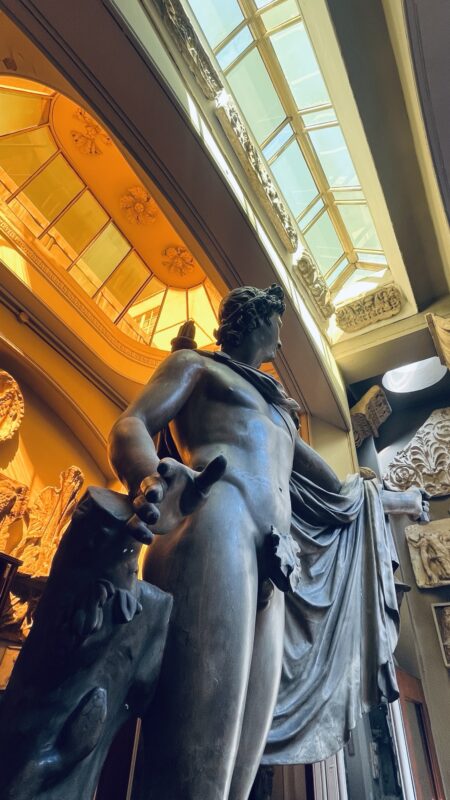
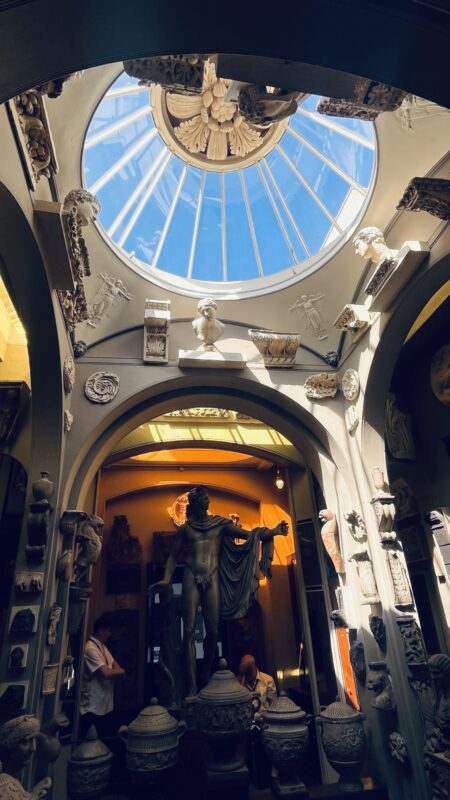
The statue of Apollo Belvedere
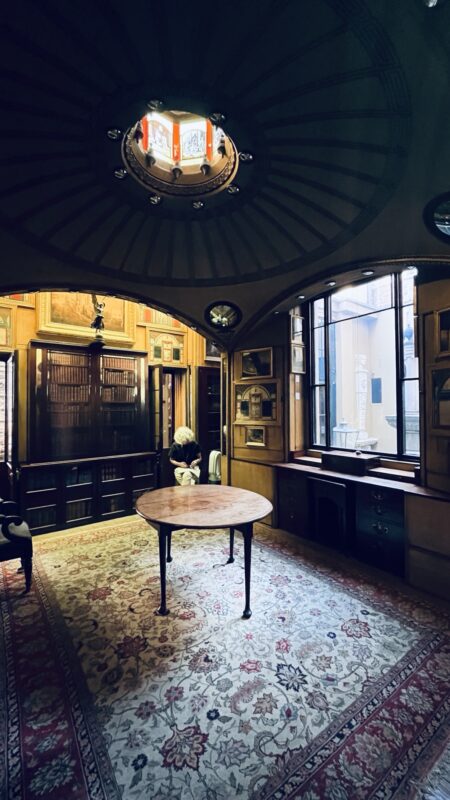
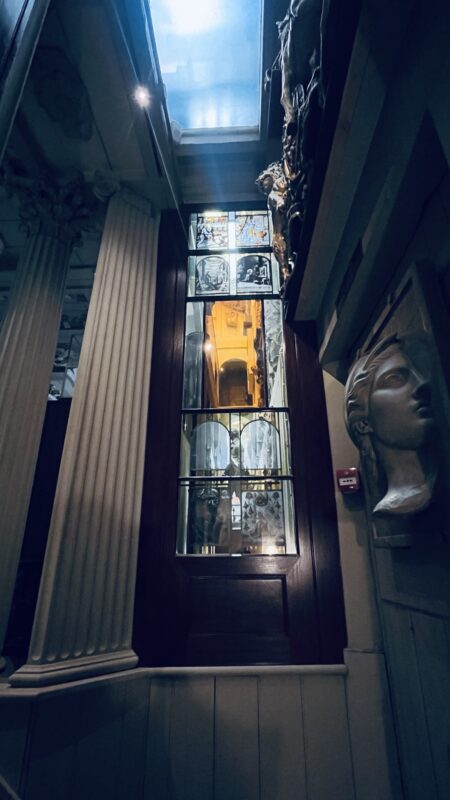
What is most remarkable about his house, is his use of light and shadows through a series of domes and skylights.
Apollo Belvedere – the museum’s most prominent statue – stands under a glass dome that filters in natural light. But Soane set the statue against the backdrop of yet another dome fitted with ochre glass creating a sunset-like effect. This real-life chiaroscuro of light and shadows was the hallmark of Soane’s work at the bank, but also creates a mournful ambience akin to a sense of loss he felt as Britain built its new identity by forsaking the old.
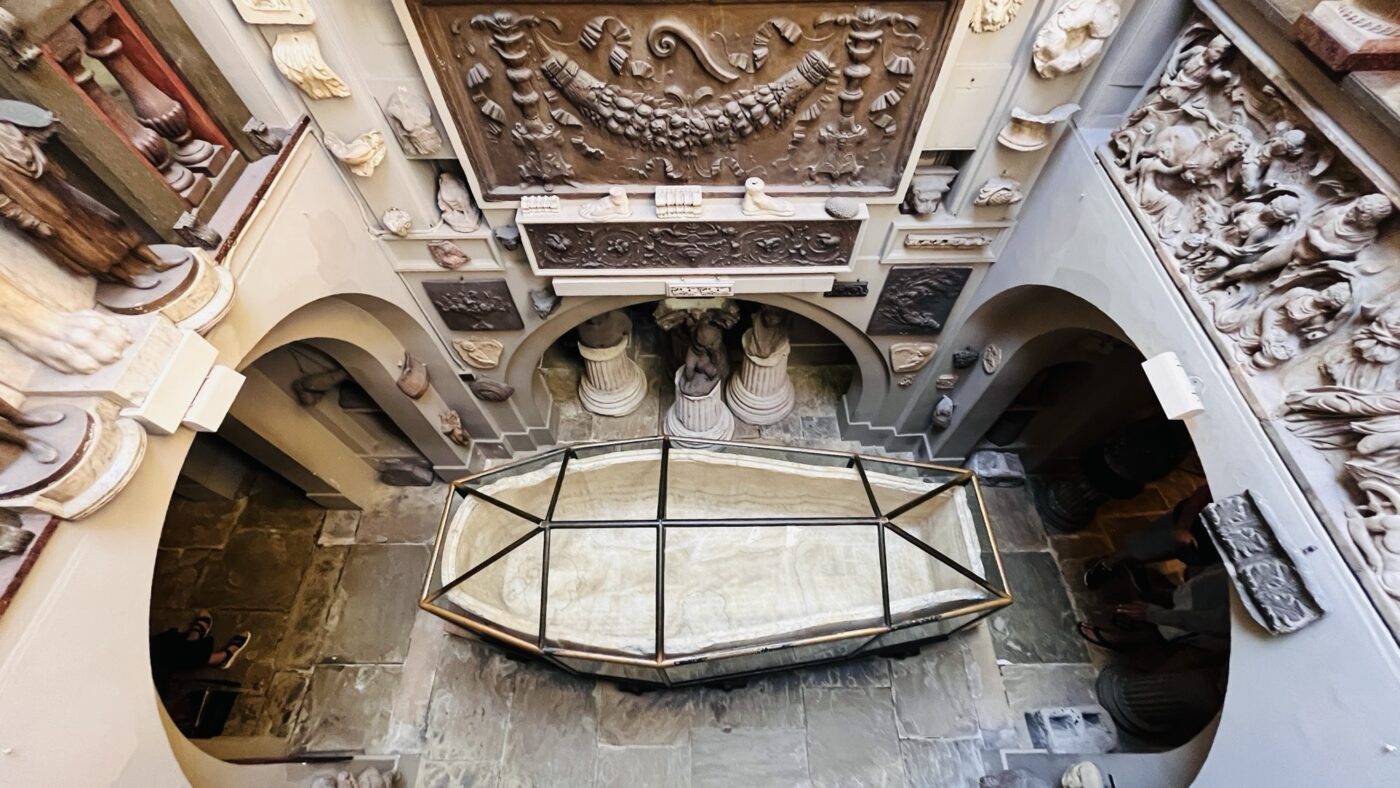
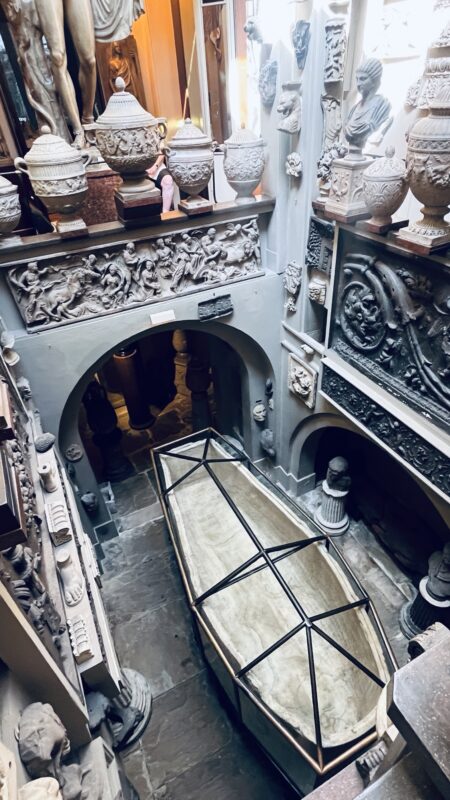
The sarcophagus of Seti
Perhaps his most prized possession in Soane’s collection is the sarcophagus of Seti which he bought for £2000. Made of alabaster, the translucent stone case is carved with hieroglyphic engravings depicting the Book of Gates – the Egyptian funerary mythology for the Pharaoh to follow in order to be reborn like the sun, as he passed through the 12 gates of the netherworld in the night.
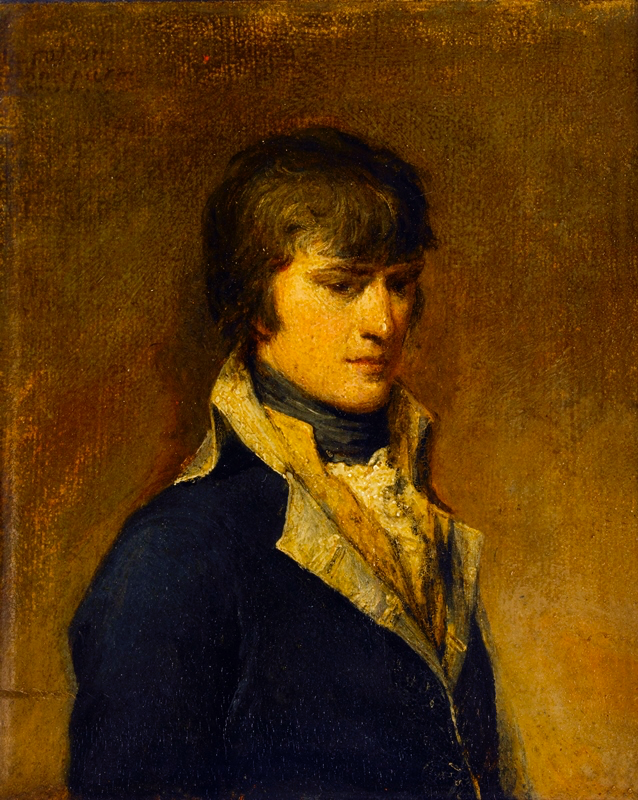
The portrait of Napoleon Bonaparte
One of the most inconspicuous artworks in the Breakfast Room is a small painting of 19-year old Napoleon Bonaparte. Painted by a Venetian artist named Francesco Cossia, it is a rare portrait of the young French general and one of Britain’s greatest military adversaries.
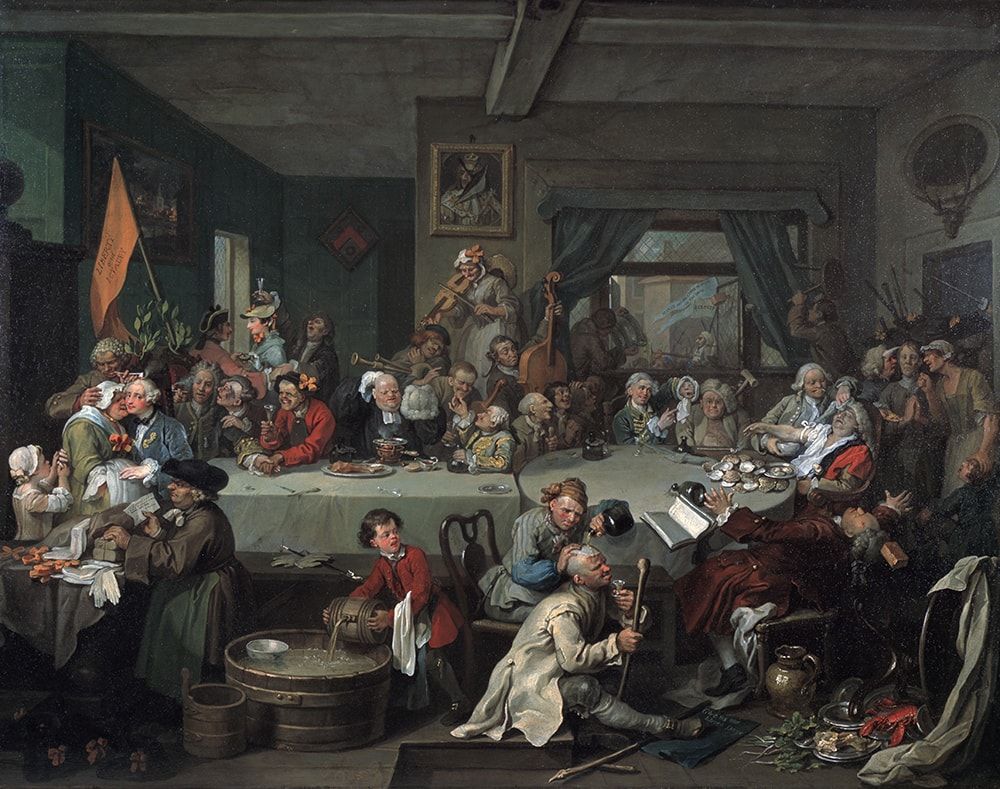
William Hogarth’s Humours of an Election II: Canvassing for Votes
William Hogarth’s series of ‘Modern Moral Subjects’ is a pictorial narrative of 18th century contemporary life portraying the corruption endemic in the electoral process, as a form of political satire in Britain.
Soane died in 1837. In 1925, Montagu Norman, the governor of the Bank of England assigned Sir Herbert Baker to transform the bank from its cavernous Roman halls to a functioning office building, erasing Soane’s legacy. Architectural historian Nikolaus Pevsner called as “the greatest architectural crime”.
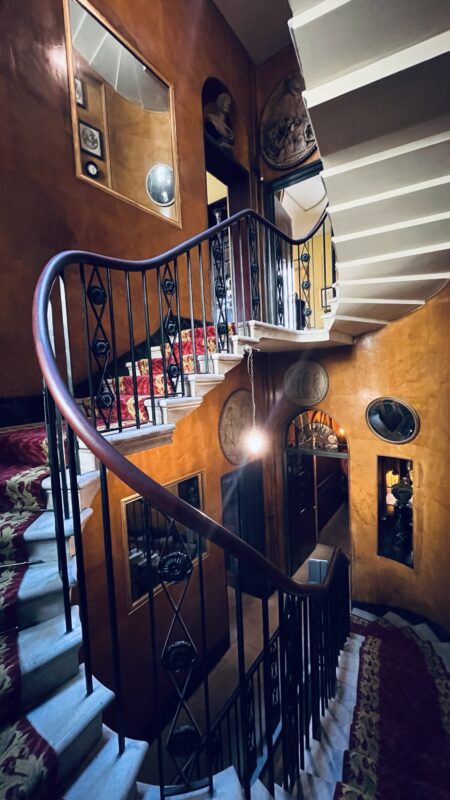
Perhaps Soane had expected this. In 1833, Soane had successfully lobbied the Parliament to guarantee the preservation of his house in perpetuity. Soane’s house is now a requiem of Neoclassicism that preserves and projects its form, function and beauty into the future. Here, figures from the past play with light and cast shadows on the walls.
Soane is one among them.

Lovely post Maddie! I had heard of this museum but never got here. I must admit when I was last in London I was quite a young lass who didn’t really appreciate such places! There is just too much to do in London and never enough time!
Always nice to hear from you, Anna. How have you been? BTW, I am now closer to you. I moved to NZ. A permanent relocation after living over 30 years in Asia. I went to London to visit before moving to NZ. It will be a long journey from here. It was relatively closer from HK. But 100% – London has so much to do and such little time. This time around I visited places you wouldn’t otherwise have on the itinerary. Sir Joann Soane’s Museum was one of it. A travel up to Oz is likely. And more places in the vicinity. Looking at New Caledonia in July. Have you been there?
Oh wow you are in NZ! A beautiful country, but yes, way too far for travel to Europe and such places! I haven’t been to New Caledonia or anywhere in that region, I would love to though! The way the world looks these days maybe travelling to the Pacific is a better idea, perhaps more peaceful and quieter! I look foward to some NZ posts coming up! Take care!