The word: Kyrgyz is believed to have derived from the Turkic word “kyrk,” meaning “forty”, referring to the 40 tribes that were united by Manas, the national hero of Kyrgyzstan. These tribes lived a nomadic life in yurts in the steppes rearing cattle, horses and sheep.
Meat is still the most consumed product in Kyrgyzstan which the country exports to Kazakhstan and Russia. Kyrgyzstan was also the easternmost garrison of the Tsarist regime. Following the October Revolution, Kyrgyzstan became SSR (Soviet Socialist Republic).
“We received education, housing, jobs, roads and a unified language(not to forget, liquor)from Lenin,” says my guide, acknowledging the contributions of the Marxist ideology. For a country of nomads that inhabited the mountains, these inheritances from the USSR was a significant shift away from their itinerant lifestyle. But it also made them dependent on Russia.
Many Kyrgyz, like other former SSR citizens, still reminisce the Soviet period with nostalgia, particularly its social safety nets; but the’ve also not forgotten what they gave up in return – in particular, suppression of Kyrgyz culture and the imposition of Russian dominance in politics and on the society. More than a generation after the demise of the Soviet Union, the country remains a curious intermix between Russian and Kyrgyz.
While the neighbouring Uzbekis are earnestly trying to rebuild their lost heritage after gaining their independence by returning to their Turco-Persian roots through Zoroastrian religion and Turkic lingua-franca that ties them closer to Latin, Kyrgyzstan has held on to Russian language and Cyrillic as their script.
But while Kyrgyzstan is the last bastion of Russian language in Central Asia, the Kyrgyz are proud of their democratic approach that has made a place for 80 nationalities who call their country home, which includes ethnic Kyrgyz, Uzbeks, Russians (20% of the total population), Dungans, Uyghurs, Tajiks, Tatars, Kazakhs, and Ukrainians, as well as Germans and Koreans among others.
The country only has 7.5 million population and many of its citizens move to Russia and Kazakhstan where they enjoy a competitive advantage for speaking Russian and being familiar with the culture (Kazakhs are the closest to Kyrgyz in their culture, language and society).
So in a world where Lenin and his ideologies are being closeted, here in Kyrgyzstan, there’s plenty of dedications to the revolutionary, murals and monuments of the former Soviet Union, hammer and sickle icons, Opera Houses, Russian Orthodox Churches, Wedding Palaces, sports complexes, tributes to Russia’s space programmes, Russian foods and other relics of the past.
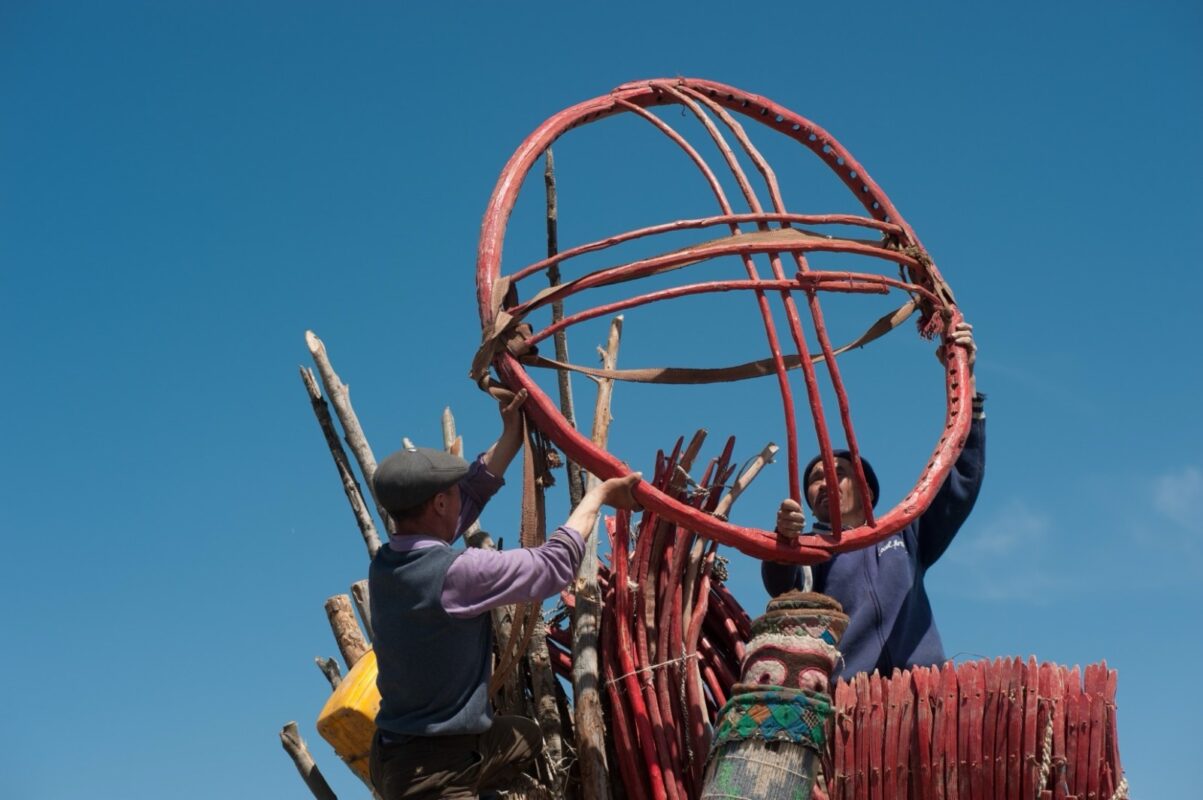
But there’s something about a land and its culture that ideologies can’t influence. With 94% of Kyrgyzstan being wild, the Kyrgyz are still true to their nomadic culture – the yurt is that strong representation of their heritage, denoting their common origin they all come from and their family system they all associate with. So much that it has found its place on the Kyrgyz flag. You can find it virtually everywhere else too – in the shape of gates, sculptures, monuments, resting places in parks, bus stops, children’s parks and every other imaginable way.
And so it is, the Kyrgyz life: a Russian exterior with a nomadic core which attracts hikers, skiers, adventurers and nature lovers like me to its steppes.
And just like Kyrgyzstan, here’s a first looks at its Russian exterior. The nomadic core and its rugged beauty comes next.
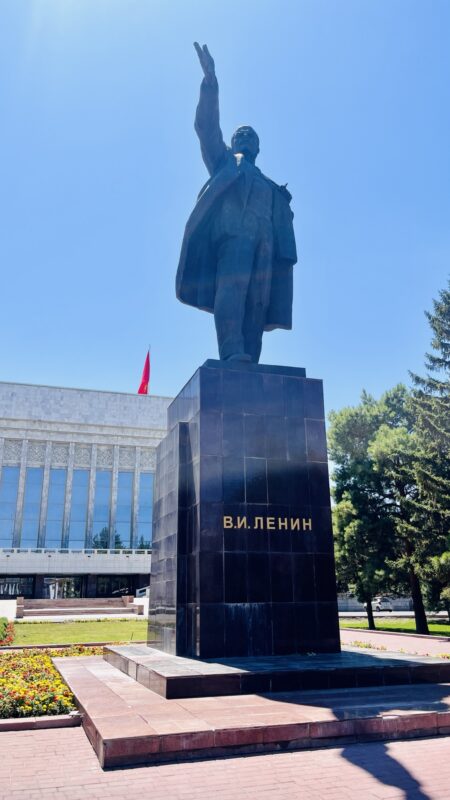
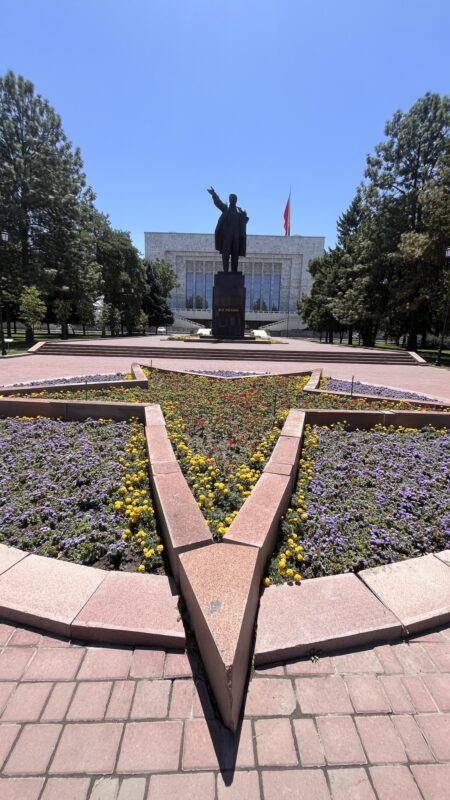
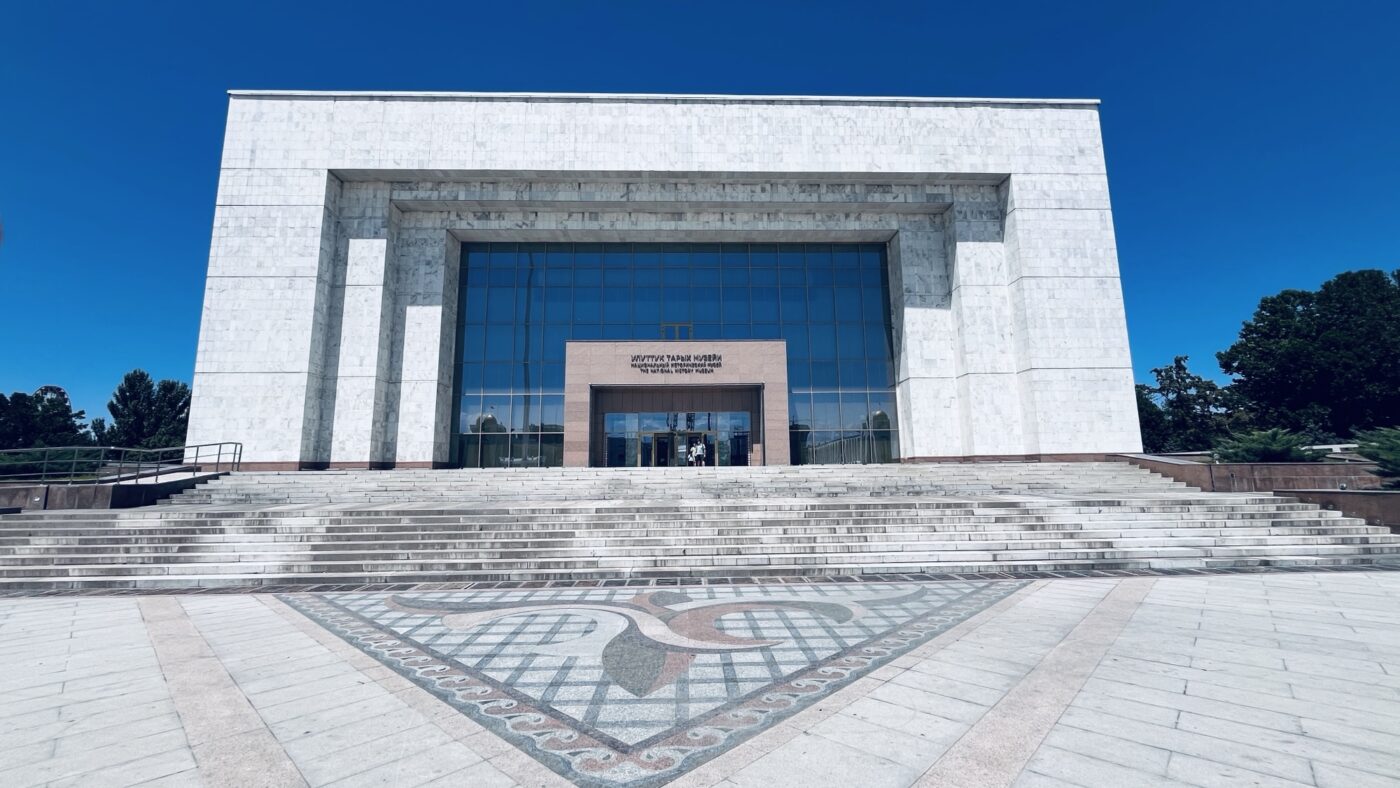
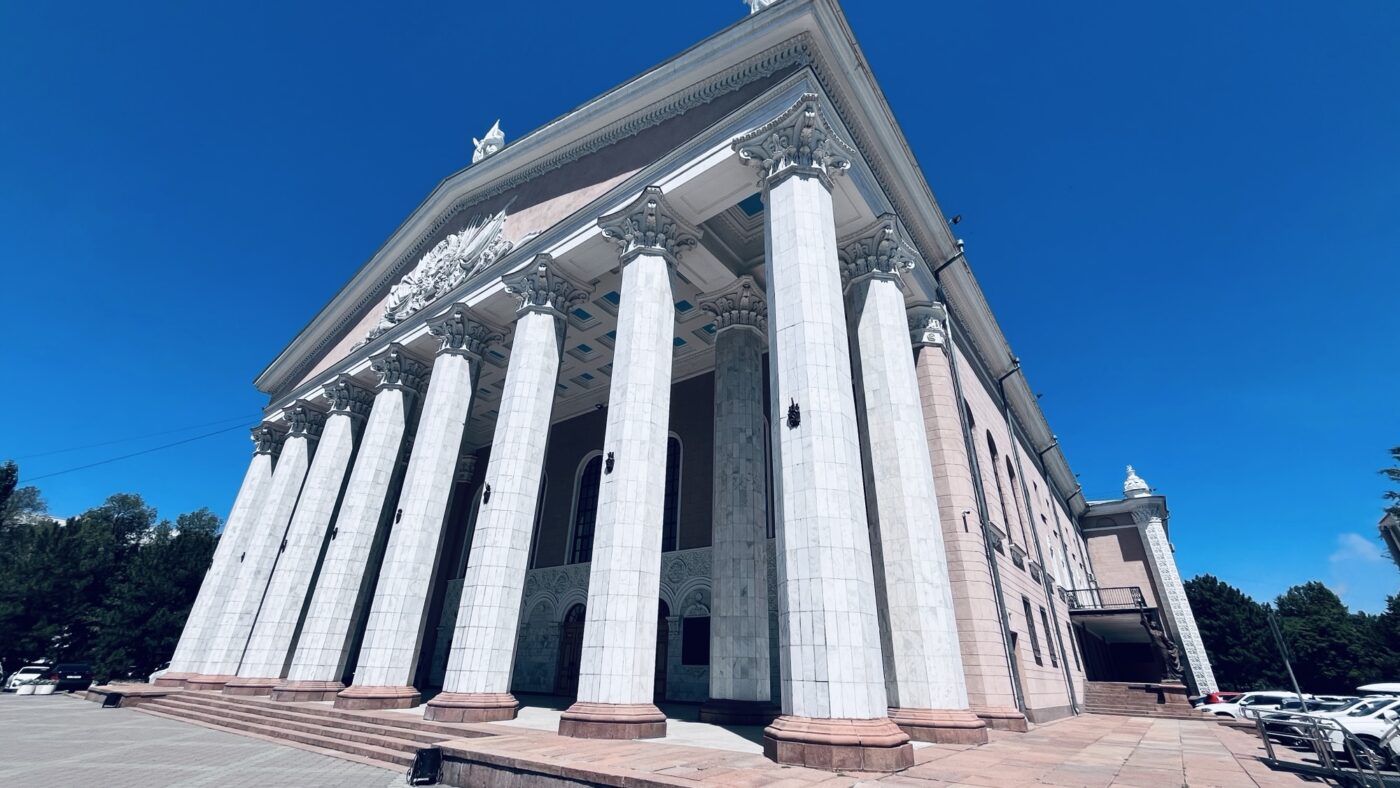
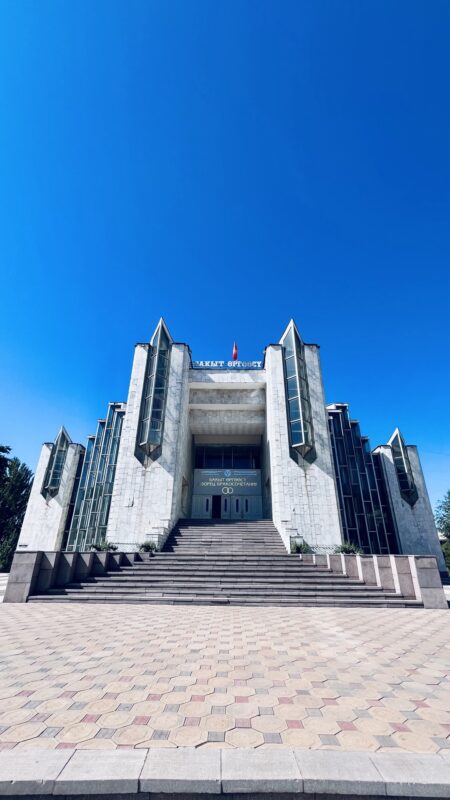
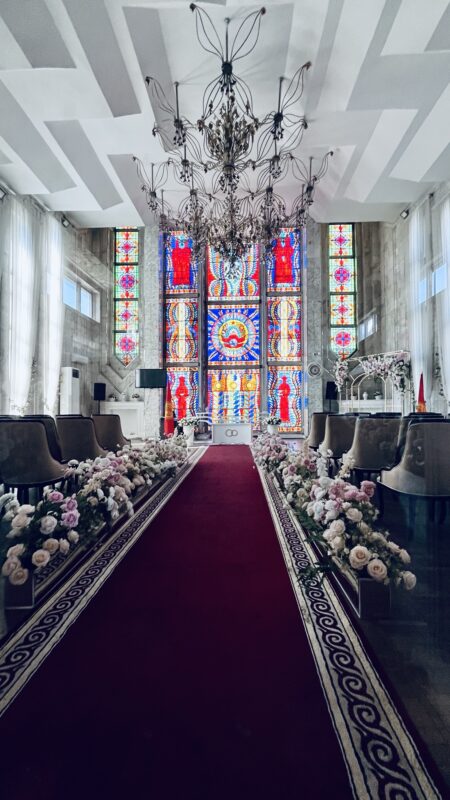
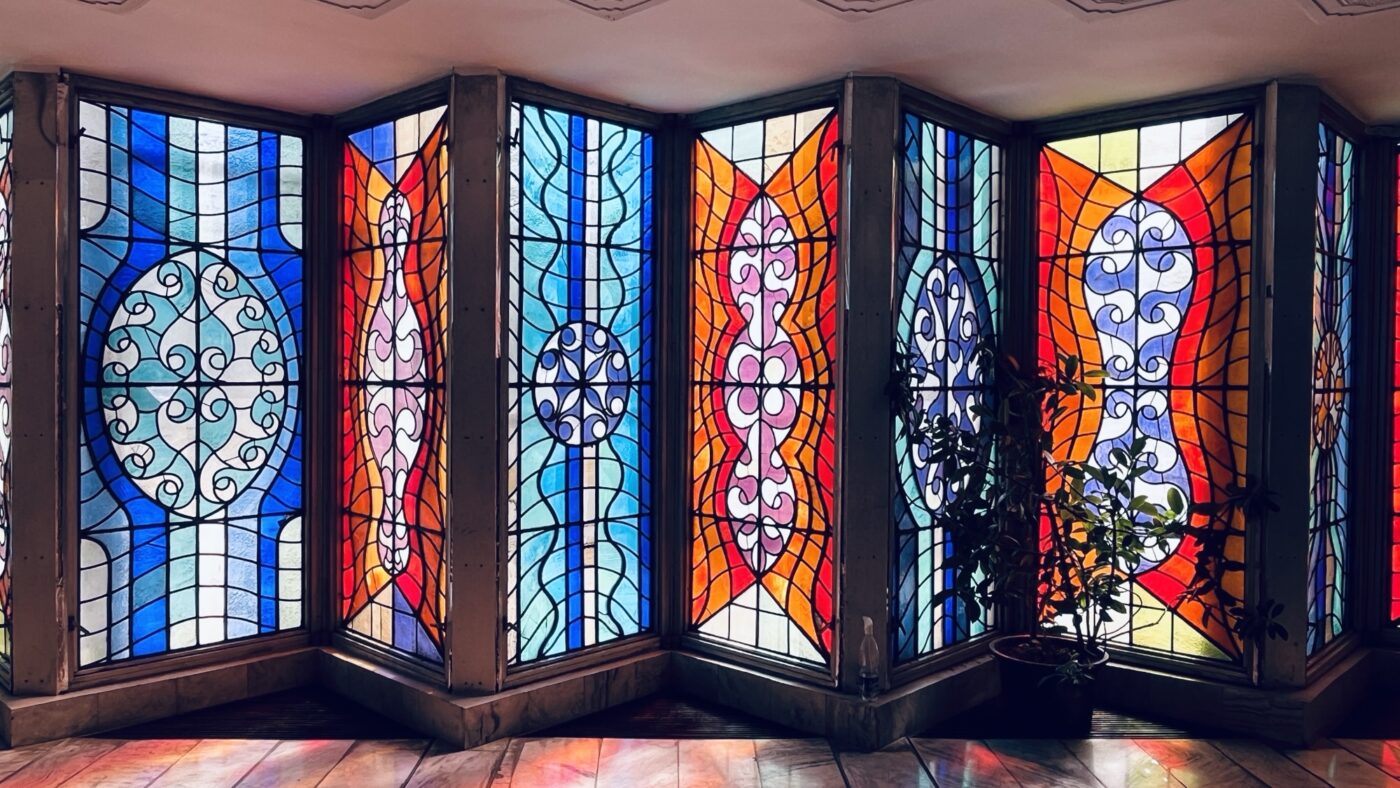
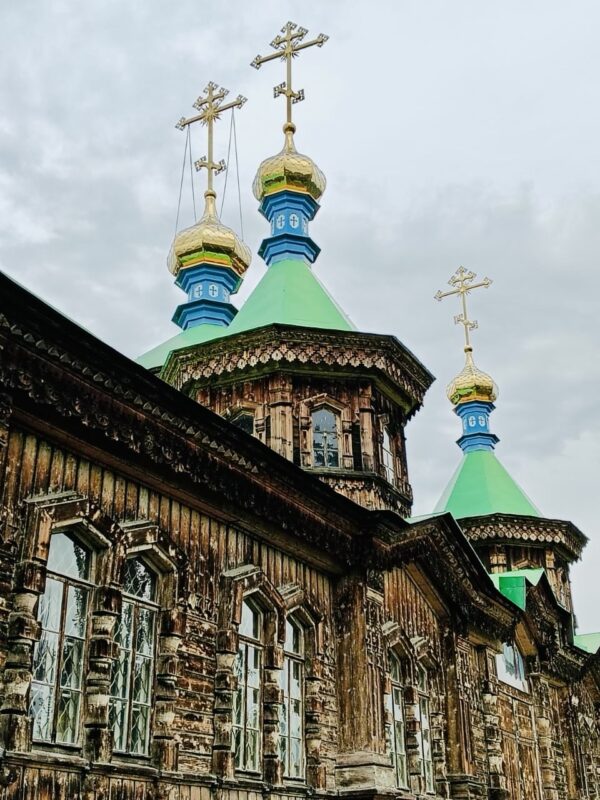
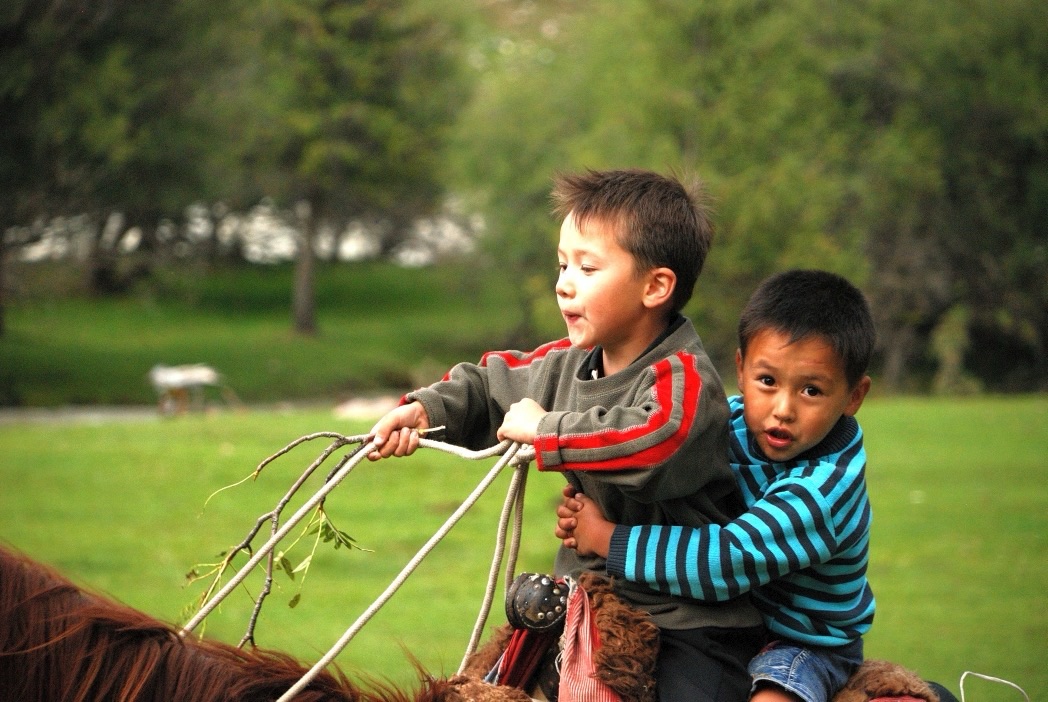
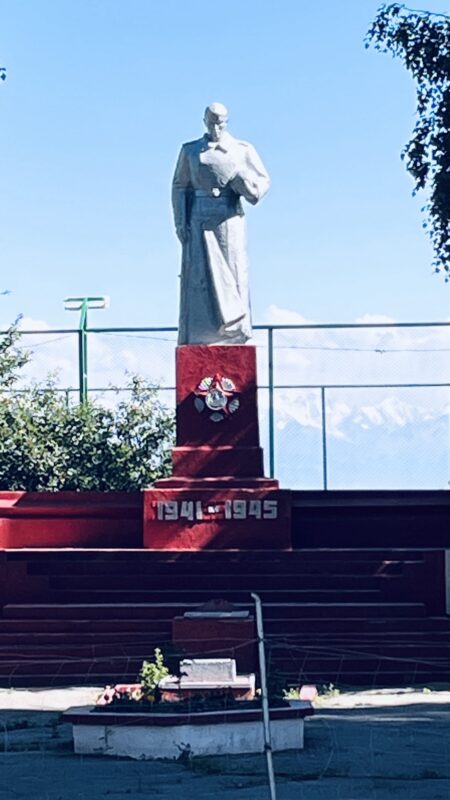
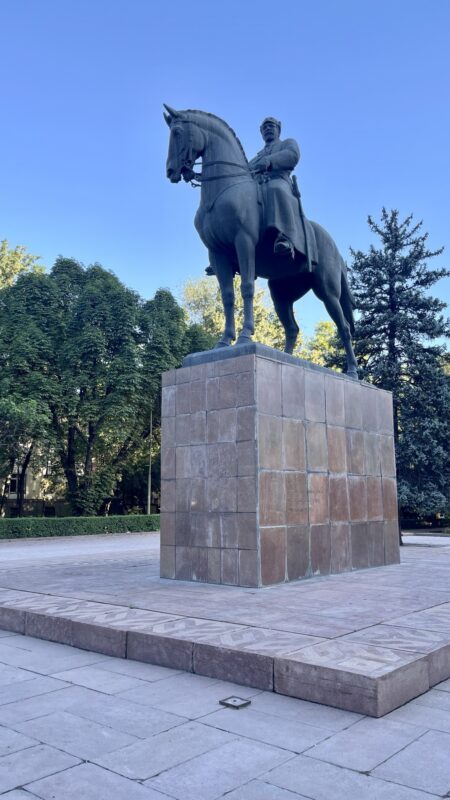
Lenin still gets a semi-important place in capital, Bishkek adorning the back side of the National Museum that flanks the Ala-Too Square.The unmistakable star representing the former USSRThe front entrance of the National Museum has the statue of Manas (under restoration) and the mosaic pattern transitions from the star to a tulip – the national flower of Kyrgyzstan.Goose stepping guards mimicking the Russian soldiers during change-of-guard at the Ala-Too Square in the heart of Bishkek.Ala-Too Square, once called Lenin Square, was built in 1984 to celebrate the 60th anniversary of the Kyrgyz Soviet Socialist Republic. Lenin’s statue once decorated the square, now replaced by Manas. Lenin was moved to the back section of the Square (see 1st photo above).Victory Monument that commemorates the 40th anniversary of the victory over Nazi Germany by the Russian forces in WWII.Created in 1985, the monument features a statue of a woman waiting for her husband to return home from the war. She is standing under a tynduk – the circular opening at the top of a traditional yurt created in the form of a funeral wreath held by three ribs of red granite representing a yurt.A rather Panetheonic-looking Opera and Ballet Theater was founded in 1926 as a training theater. The current building was built in 1955, and still holds regular performances to this day. Each of the pillars still has the old hammer and sickle plaques.The UFO-like structure of Bishkek Circus was built in 1976 and still functions to this day with acts from Kazakh, Kyrgyz and Russian acrobatsWedding Palace – an integral part of many of the former SSR countries. This one in Bishkek mimicks the grandeur of cathedrals and the white marble denoting purity of Islam while representing a futuristic castle that is meant to represent the utopian world where no religion, only love, exists.The maroon carpet leads up to the ceremonial room that is bathed in a celestial light streaming through the stained glass and plain windows.The ceremonial room has stained glass with Kyrgyz motifs and celestial light from the plain glass panes.Stained glass windows with Kyrgyz patterns are in the lobby area too. The Wedding Palace, unlike the one in Tbilisi is still in use in Bishkek.Russian Orthodox Church in Karakol. The town is only 150km from China border and was the easternmost garrison town for the Tsarist regime. It is still a favourite among Russian tourists.An old Soviet-era bus stop with Pioneers, a family drinking tea and Russian circus murals in relatable depictions.Prominent writer, socialist and supporter of the Bolsheviks, Maxim Gorky stands in a nearby park, perhaps meant to be similar to the famous Gorky Park in Moscow.After experiencing trains and stations that are the “great British invention”, I was delighted to travel in the train that was a part of the “great Soviet invention”.Horses are bred for meat and for exports in Kyrgyzstan. They are the most reliable form of transportation in Kyrgyzstan and children as young as 5 adept at riding them.A memorial dedicated to the Kyrgyz soldiers that were a part of the Red Army during WWII. Mikhail Frunze – a decorated soldier born in Bishkek and Red Army commander during the Russian Civil War was allegedly assassinated by Joseph Stalin. Bishkek International Airport is named after him.Manas – the national hero, whose epic is an oral history passed on by generations.
And finally, the Kyrgyz flag has a golden sun with 40 rays representing the 40 tribes of Kyrgyzstan in the shape of a tündük, the centre opening in a yurt.The tündük in a yurt. Typically an open gap that provides ventilation and lets the smoke escape from the cooking.The tündük as seen from inside the yurt
9 thoughts on “Kyrgyzstan – where Lenin and Manas live together”
Oh Maddie how fantastic that you got to another Stan!!!! How wonderful! Did you go straight from Singapore or have to do KL? I so look forward to seeing more of this country through your eyes. X
Can any blog be complete without your comment Anna? I was waiting for you to reply. Yes! Another stan and hold on – I am travelling to Turkmenistan from here on Friday so will share stories from there too though I don’t think it will match the beauty of Kyrgyzstan. The internet is really patchy here. I am still in the mountains and what a place it is! Untouched and real and so so beautiful.
Oh wow so amazing! It sounds like you are having a wonderful trip! I am eagerly looking out for your blog posts…. I had to cancel my travels this year (i am not having luck these days). I was due to go to Dubai and Azerbaijan butjust before leaving the missiles were flying all over the place and i cancelled. So sad but “crap” happens i guess. I need my travel fix from you now, seeing you go to “my” type of places! Enjoy!
Sorry Anna. Azerbaijan would have been incredible. Such a unique destination. I know what you mean when you say things being a little risky. I too had to find alternate ways to return from Ashgabat as I didn’t want to fly over Iran. It had closed the airspace a while back and that would have impacted my return. It’s nice to have you on the other end of the blogs Anna. Wonderful to communicate about our love for out of the ordinary destinations.
I just replied to one of your comments Anna. Thank you always for your support. Hey! Thought i should mention, I left Singapore. I am in Hong Kong now with my family. I flew to KG via Istanbul. Greetings from Song Kul lake. A blog is in the making. 🥰
Oh wow HK… nice! And wow you go all the way to istanbul then kind of back to KG. Lol. I was hoping there might be flights via singa or KL, make life easier!







Oh Maddie how fantastic that you got to another Stan!!!! How wonderful! Did you go straight from Singapore or have to do KL? I so look forward to seeing more of this country through your eyes. X
Can any blog be complete without your comment Anna? I was waiting for you to reply. Yes! Another stan and hold on – I am travelling to Turkmenistan from here on Friday so will share stories from there too though I don’t think it will match the beauty of Kyrgyzstan. The internet is really patchy here. I am still in the mountains and what a place it is! Untouched and real and so so beautiful.
Oh wow so amazing! It sounds like you are having a wonderful trip! I am eagerly looking out for your blog posts…. I had to cancel my travels this year (i am not having luck these days). I was due to go to Dubai and Azerbaijan butjust before leaving the missiles were flying all over the place and i cancelled. So sad but “crap” happens i guess. I need my travel fix from you now, seeing you go to “my” type of places! Enjoy!
Sorry Anna. Azerbaijan would have been incredible. Such a unique destination. I know what you mean when you say things being a little risky. I too had to find alternate ways to return from Ashgabat as I didn’t want to fly over Iran. It had closed the airspace a while back and that would have impacted my return. It’s nice to have you on the other end of the blogs Anna. Wonderful to communicate about our love for out of the ordinary destinations.
I think I left a comment here yesterday but maybe it’s gone to spam??
I just replied to one of your comments Anna. Thank you always for your support. Hey! Thought i should mention, I left Singapore. I am in Hong Kong now with my family. I flew to KG via Istanbul. Greetings from Song Kul lake. A blog is in the making. 🥰
Oh wow HK… nice! And wow you go all the way to istanbul then kind of back to KG. Lol. I was hoping there might be flights via singa or KL, make life easier!
Yah. Life never goes in a straight line. Will you ever come to HK, Anna? Do consider please. You have a buddy waiting there to show you around.
Pingback: Ala-Kul Lake – World Without Compass